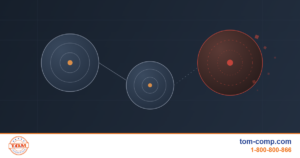

Segmentation is a network architecture approach that divides an organization’s network into isolated sub-networks. In cybersecurity, this approach implements the principle of defense-in-depth and significantly reduces the potential attack surface in the event of a breach.
Foundations of Segmentation
Segmentation is the process of dividing the organizational network into logically or physically separate segments. Combined with other security components such as firewalls, segmentation enables:
-
Resource Isolation: Separation of sensitive systems, data, and resources from less secure networks.
-
Access Control: Enforcement of precise access rules for each segment based on the principle of least privilege.
-
Traffic Monitoring: Supervision and control over communication between different network segments.
-
Damage Containment: Limiting the spread of security breaches to a single segment rather than the entire network.
Why Is Segmentation Essential?
-
Reducing the Attack Surface
Segmentation drastically limits the potential damage of a breach. In a flat network, an attacker who gains access may move freely across systems and data. In contrast, a segmented network restricts the attacker to the compromised segment only. -
Compliance with Regulations
Many cybersecurity regulations, such as GDPR, HIPAA, PCI-DSS, and ISO 27001, mandate or strongly recommend segmentation as a control mechanism for protecting sensitive data. Proper segmentation helps organizations meet these requirements. -
Flexible Protection of Resources
Segmentation allows organizations to create “hardened zones” around their most sensitive systems and data, adding extra layers of protection beyond those used for less critical assets.
Methods of Implementing Segmentation
-
Physical Segmentation: Complete separation of networks using independent hardware (e.g., cables, switches).
-
Virtual Segmentation: Logical separation of networks on shared physical infrastructure.
-
Micro-Segmentation: Logical isolation at the software level, enabling separation of resources based on type, classification, and usage within the same network.
Challenges in Implementing Segmentation
Despite its clear benefits, segmentation presents several challenges:
-
Operational Complexity: Comprehensive segmentation requires careful planning, implementation, and ongoing management.
-
Infrastructure Requirements: Physical infrastructure (e.g., in-wall cabling) must support segmentation.
-
Hardware Compatibility: All hardware components (switches, firewalls, routers, access points) must support the required segmentation model.
Real-World Example: “866” Software Company
Let’s examine a case study of a mid-sized software company called “866,” which has four main departments:
-
Development Department: Builds the company’s products
-
Finance Department: Manages payments, salaries, and financial data
-
HR Department: Manages employee and recruitment data
-
Marketing & Sales Department: Manages customer relationships and marketing data
Segmentation Architecture
The company implemented logical segmentation as follows:
-
Each department was placed on a separate network using virtual segmentation.
-
Each server (development, production, control systems) was also placed on a dedicated virtual network.
-
The organization’s firewall was configured with strict traffic rules based on the principle of least privilege.
Security Policy Between Segments
In this segmented environment:
-
The development team can access development and testing servers but has limited access to production — only specific services.
-
The finance team can access financial data servers but not code repositories or production systems.
-
The HR team can access HR systems only, with no access to financial or development resources.
-
The marketing and sales team can access CRM and customer data, but not other systems.
Benefits of Segmentation in This Case
-
If an attacker compromises the marketing segment, they cannot access financial data or source code.
-
A data leak from HR would not expose financial or development information.
-
Unauthorized communication attempts between networks are logged and blocked by the firewall.
-
In case of malware infection, the damage is contained within one network and does not spread across the organization.
Conclusion
Segmentation is not merely a recommended practice — it is essential in today’s threat landscape. It provides a critical layer of protection, reducing the risk of large-scale breaches and limiting the impact of successful attacks. As demonstrated in the case of “866,” proper segmentation combined with effective firewall management delivers precise, business-aligned protection for organizational assets.